
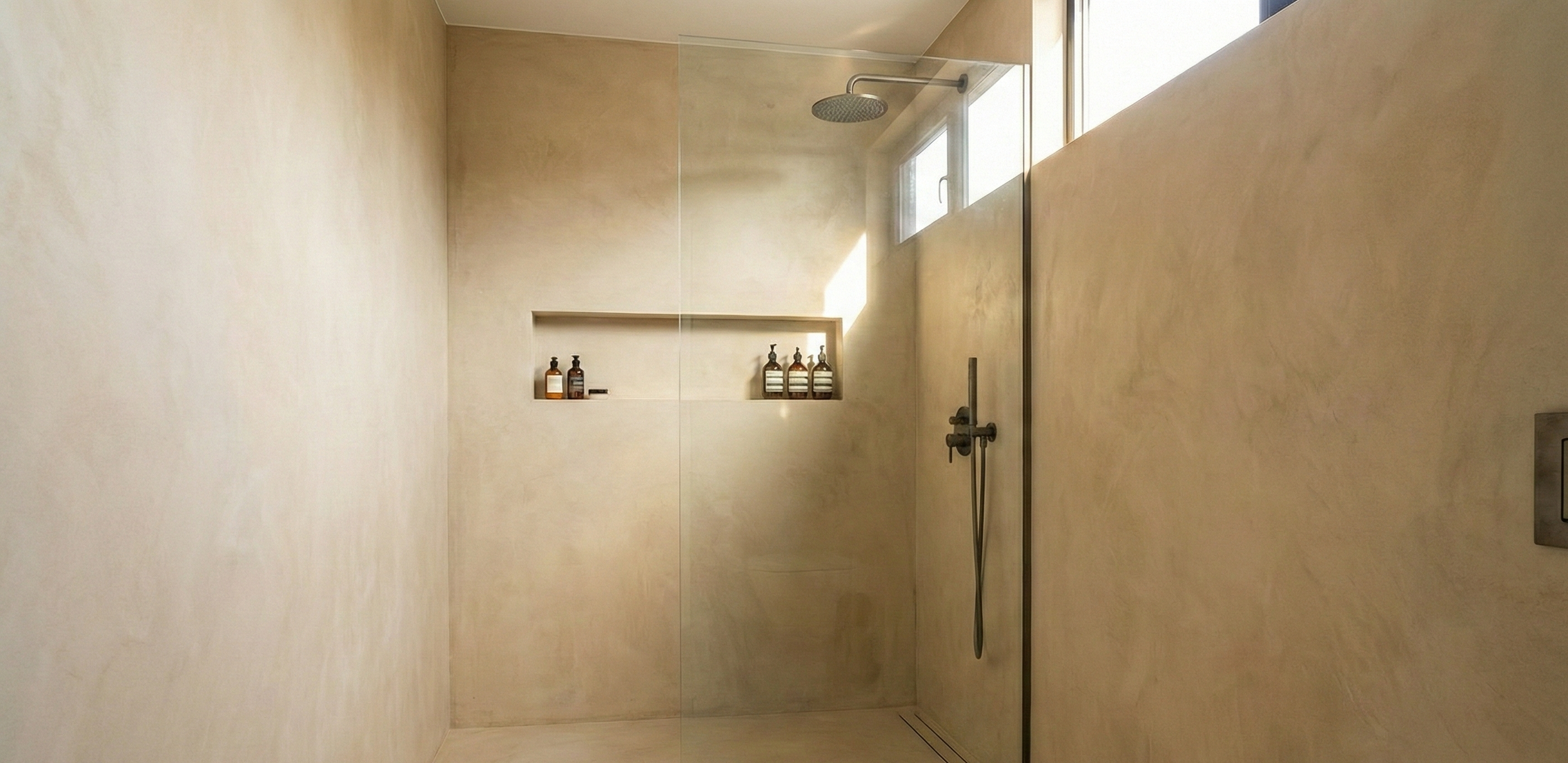
Microcement Surfaces & Wet Rooms
A continuous, hand-applied surface system for walls, floors, and wet rooms.
Microcement is treated as a complete surface system — from design and preparation through to refinement and sealing — to ensure durability in real residential and commercial environments.

What is Microcement?
Microcement is a continuous, hand-applied surface system used to create seamless walls, floors, and wet-room environments. Applied in thin layers over rigid substrates, it allows architectural continuity across planes without joints or grout lines.
At Skim Co, microcement is treated as a system, not a coating. Each project includes careful substrate assessment, detailing, reinforcement where required, and a sealing approach appropriate to the space and use.
Microcement is suitable for:
Interior walls and floors
Bathrooms and wet rooms
Showers and continuous floor-to-wall transitions
Integrated architectural elements
All microcement work is applied by hand and finished with durability in mind. In wet areas, waterproofing and sealing are handled as part of the system, not as afterthoughts.
Microcement is best suited to clients seeking a calm, contemporary surface with subtle variation, and who value continuity, restraint, and longevity over decorative effect.
Microcement Process:
Surface as Architecture.

Consultation & Site Visit
We assess existing substrates, moisture conditions, junctions, and movement risks to determine suitability and scope. Microcement performance depends entirely on what it’s applied to.

Design, Mood & Materials
We establish a clear understanding of the space, desired tone, and material intent. We establish colour direction, surface character, and level of variation before any technical work begins.

Surface Preparation
Substrates are prepared, flattened, and reinforced where required to create a stable base for a thin-build system. Transitions, corners, and penetrations are detailed before finish layers begin

Waterproofing
In wet rooms and showers, a dedicated waterproofing system is installed and integrated with drains, penetrations, and transitions. Microcement is applied only after waterproofing is complete and verified.

Microcement Layers
Microcement is applied by hand in multiple thin layers, allowing for subtle variation while maintaining surface continuity. Each layer is allowed to cure before refinement and progression.

Sealing & Final Protection
Surfaces are refined to control texture, flatness, and edge conditions before being sealed using systems appropriate to their location and use. In wet areas, sealing is selected for moisture resistance and long-term durability, not just appearance.
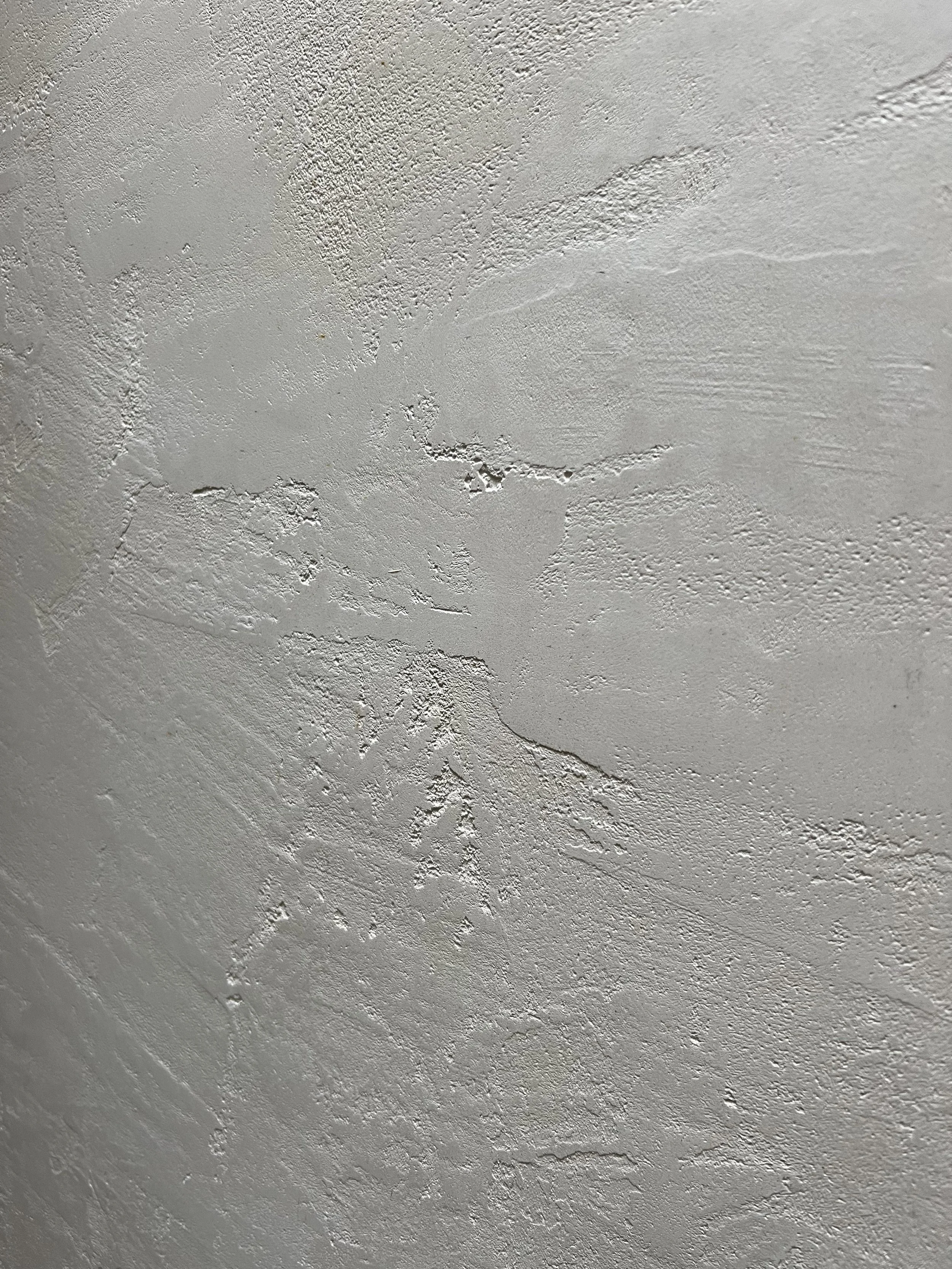
Microcement Texture & Tone Examples
-
![]()
Drift Finish - Microcement
Ultra subtle, architectural
-
![]()
Cloud Finish - Microcement
Soft tonal movement
-
![]()
Strata Finish - Microcement
Directional trowel texture
-
![]()
Stonewash Finish - Microcement
Deeper mineral variation
-
![]()
Terrain Finish - Microcement
Layered trowel texture with natural mineral variation.




Microcement FAQ
-
No. Microcement is applied by hand and exhibits natural tonal variation and movement. This variation is inherent to the material and is considered part of its character.
-
Yes, when installed as part of a complete system that includes proper substrate preparation, waterproofing, and sealing. Suitability is confirmed during assessment.
-
Microcement is a thin-build system that relies on stable substrates. While reinforcement systems are used where required, movement in the underlying structure can lead to cracking. Substrate suitability is assessed before proceeding.
-
Microcement itself is not waterproof. Dedicated waterproofing and sealing systems are required in wet areas and are treated as integral to the installation.
-
When installed and sealed correctly, microcement is suitable for everyday residential use. Like all continuous surfaces, it may show wear over time depending on use and maintenance.
-
No. Microcement is not appropriate for unstable substrates or environments subject to excessive movement. Suitability is determined during consultation and assessment.
-
Microcement is available in a wide range of colours, from soft neutrals to darker statement tones. At Skim Co, pigments are custom-tinted during the sampling process so the colour can be tailored to the space.
-
See our Surface Guide.