

Built-ins
Designed, formed, and finished as part of the architecture.
Built-ins provide integrated architectural elements, formed precisely to support seamless surfaces and clean transitions.
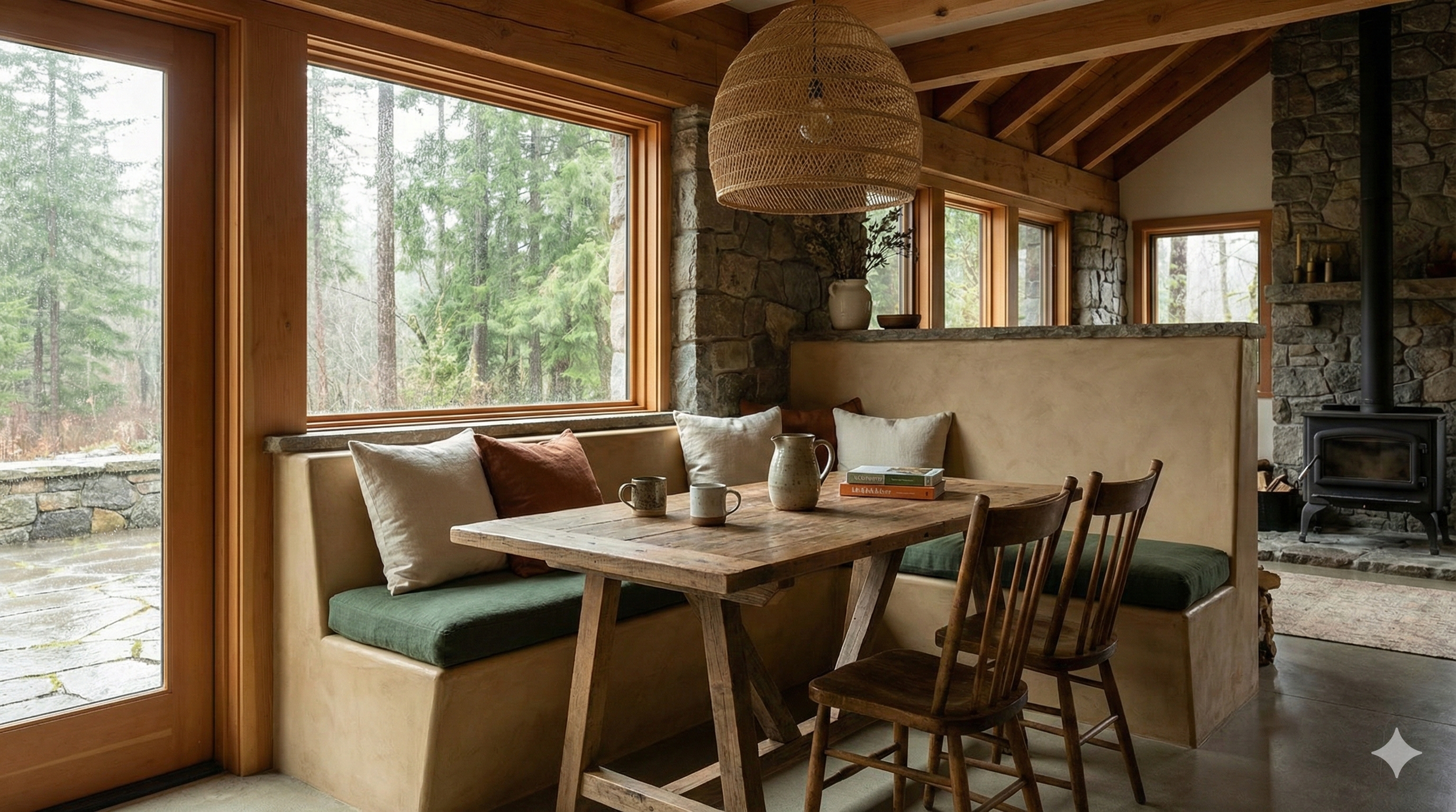
Microcement Built-ins
Built-ins are custom, integrated architectural elements designed to support continuous microcement surfaces. Constructed as part of the architecture rather than added as furniture, they read as calm, monolithic volumes with clean transitions and a unified material presence.
At Skim Co, built-ins are approached as engineered substrates for microcement, not standalone millwork. Each project includes spatial planning, digital modeling, substrate engineering, and coordination of form and finish to ensure continuity and durability.
Built-ins are suitable for:
• Couches, benches, and banquettes
• Vanities and bathroom storage
• Shelving and media units
• Fireplaces and architectural features
All built-ins are designed, formed, and finished in microcement, allowing surfaces to wrap seamlessly across planes and edges. Substrates are engineered specifically to support hand-applied microcement for consistent performance and finish quality.
Built-ins are best suited to clients seeking fully integrated architectural elements, where form and surface are resolved together for a cohesive, contemporary interior.
Built-In Construction Process
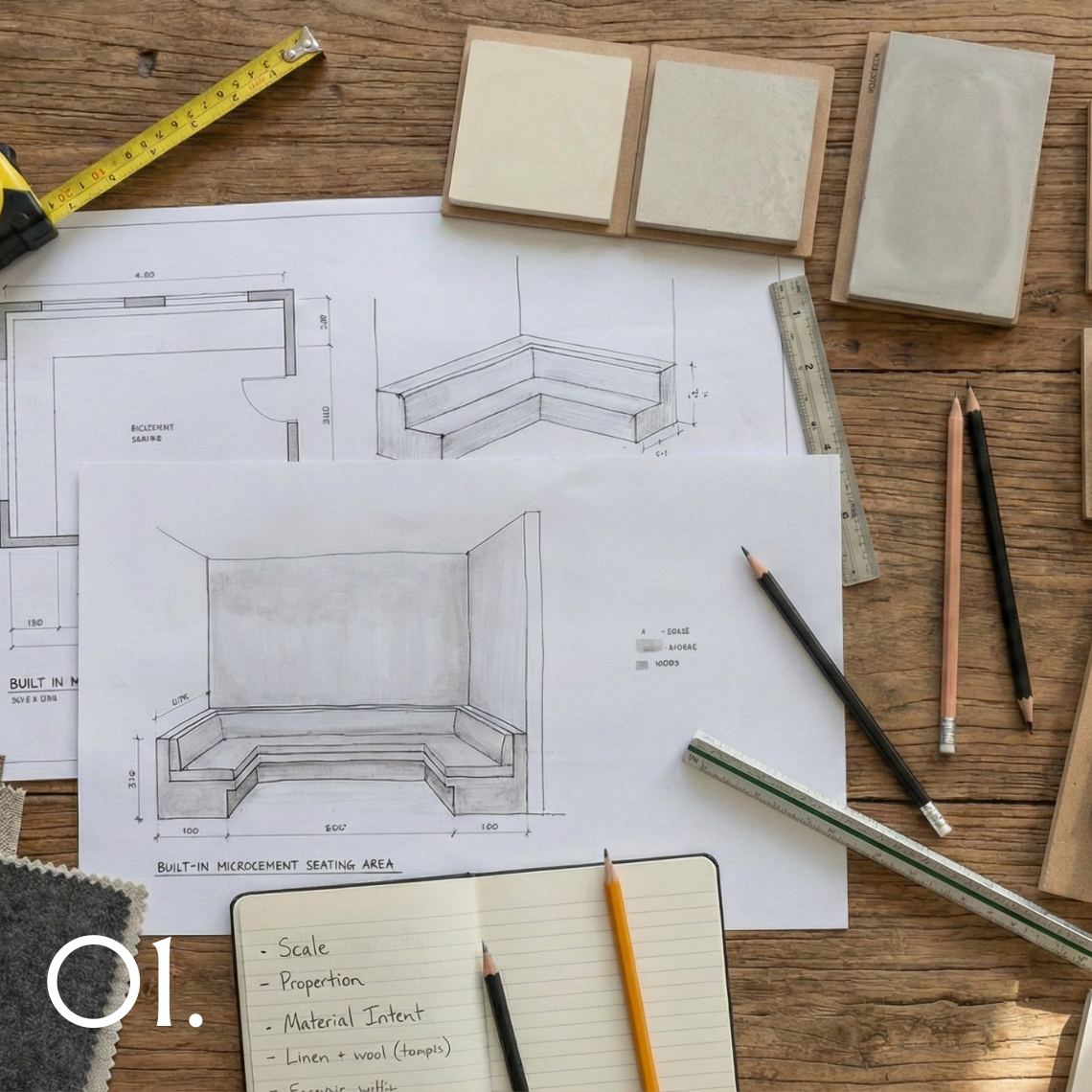
Spatial Design & Material Direction
Each built-in begins with understanding how the element shapes the space and supports continuous microcement surfaces. Scale, proportion, use, and material intent are established before any fabrication begins.
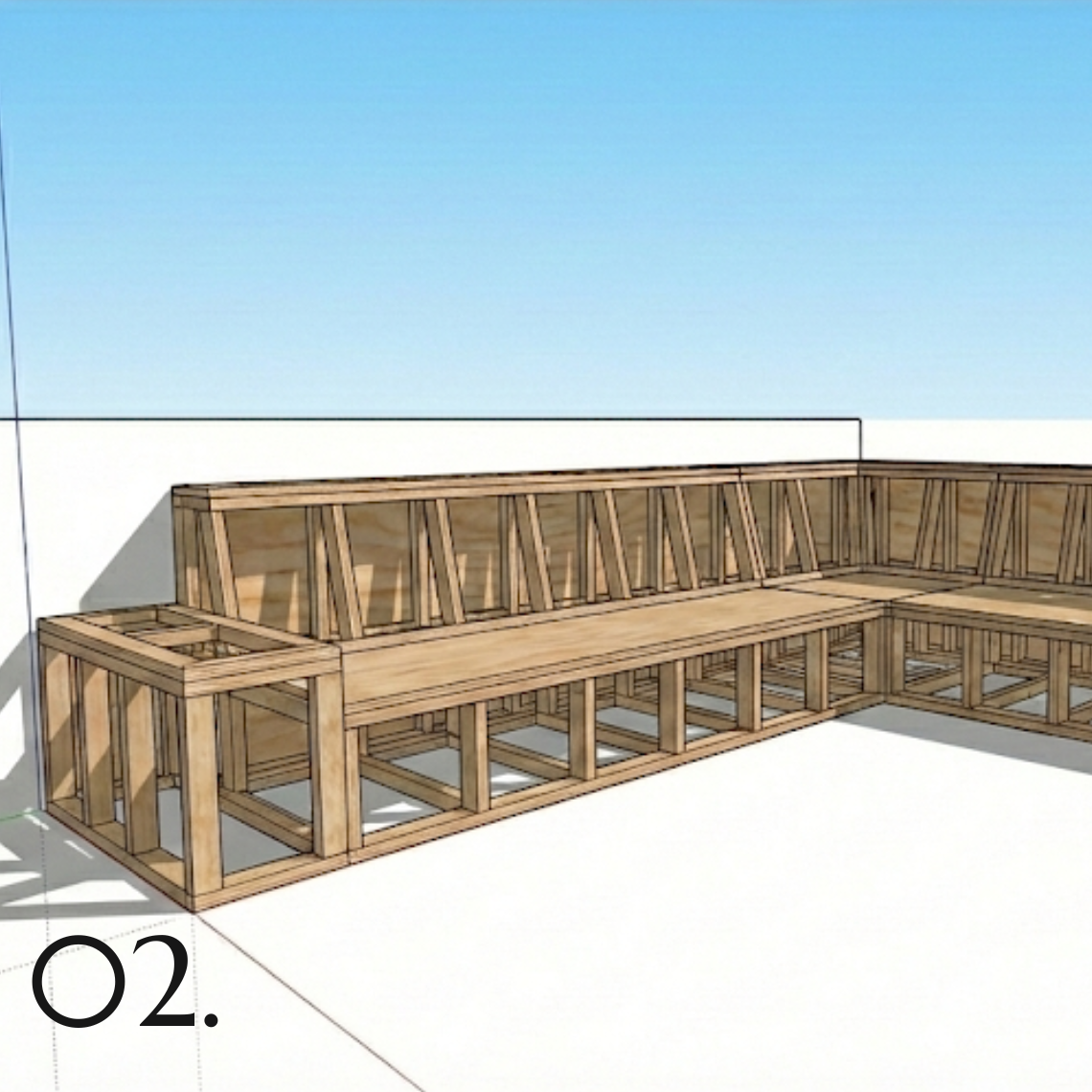
Digital Modeling & Detailing
Built-ins are digitally modeled to resolve dimensions, junctions, edge conditions, and surface transitions. This step allows form, structure, and finish to be coordinated before construction.
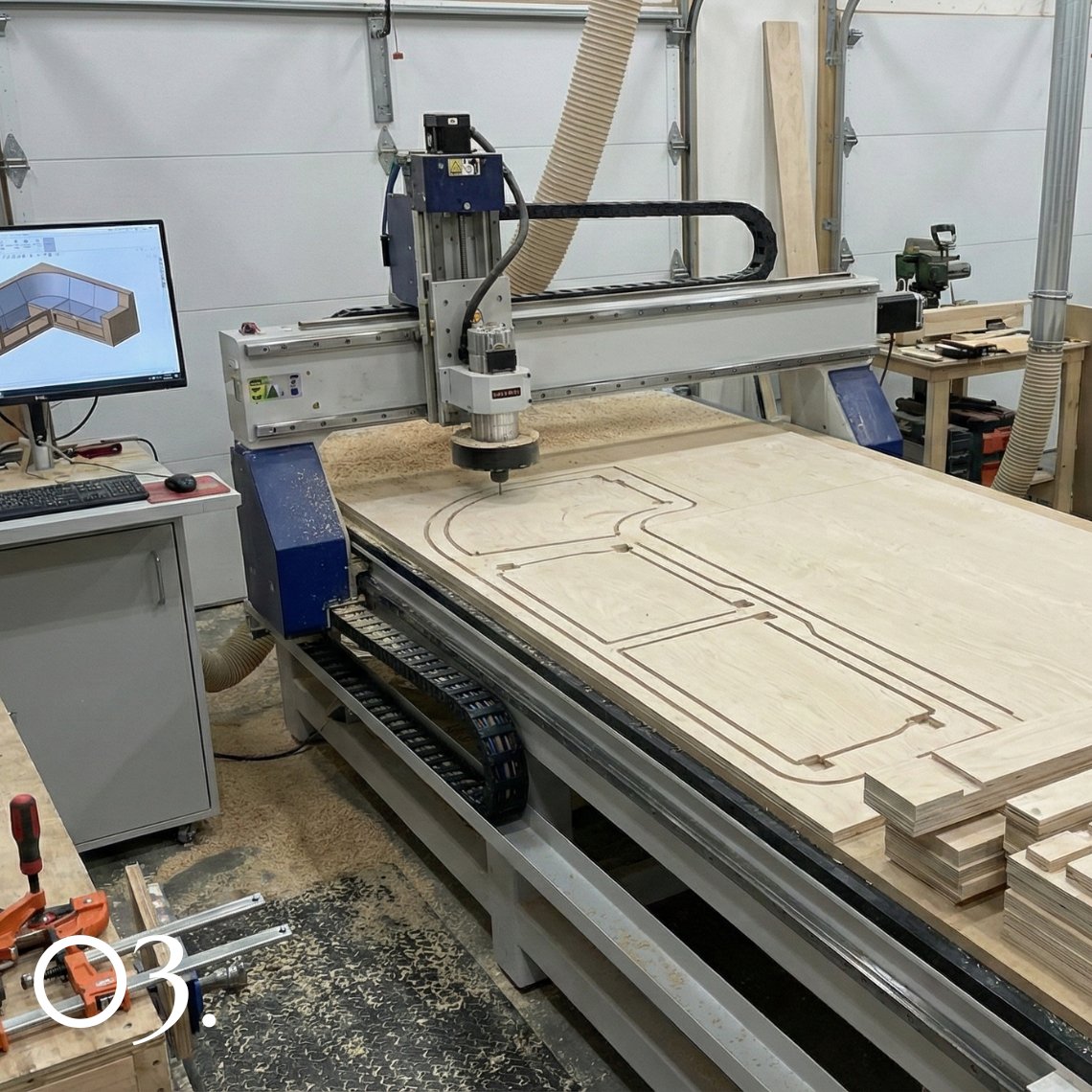
CNC Fabrication and Forming
Where precision is required, components are CNC-cut to ensure accuracy and consistency across edges, openings, and profiles. Elements are then assembled and reinforced to create clean, stable forms.
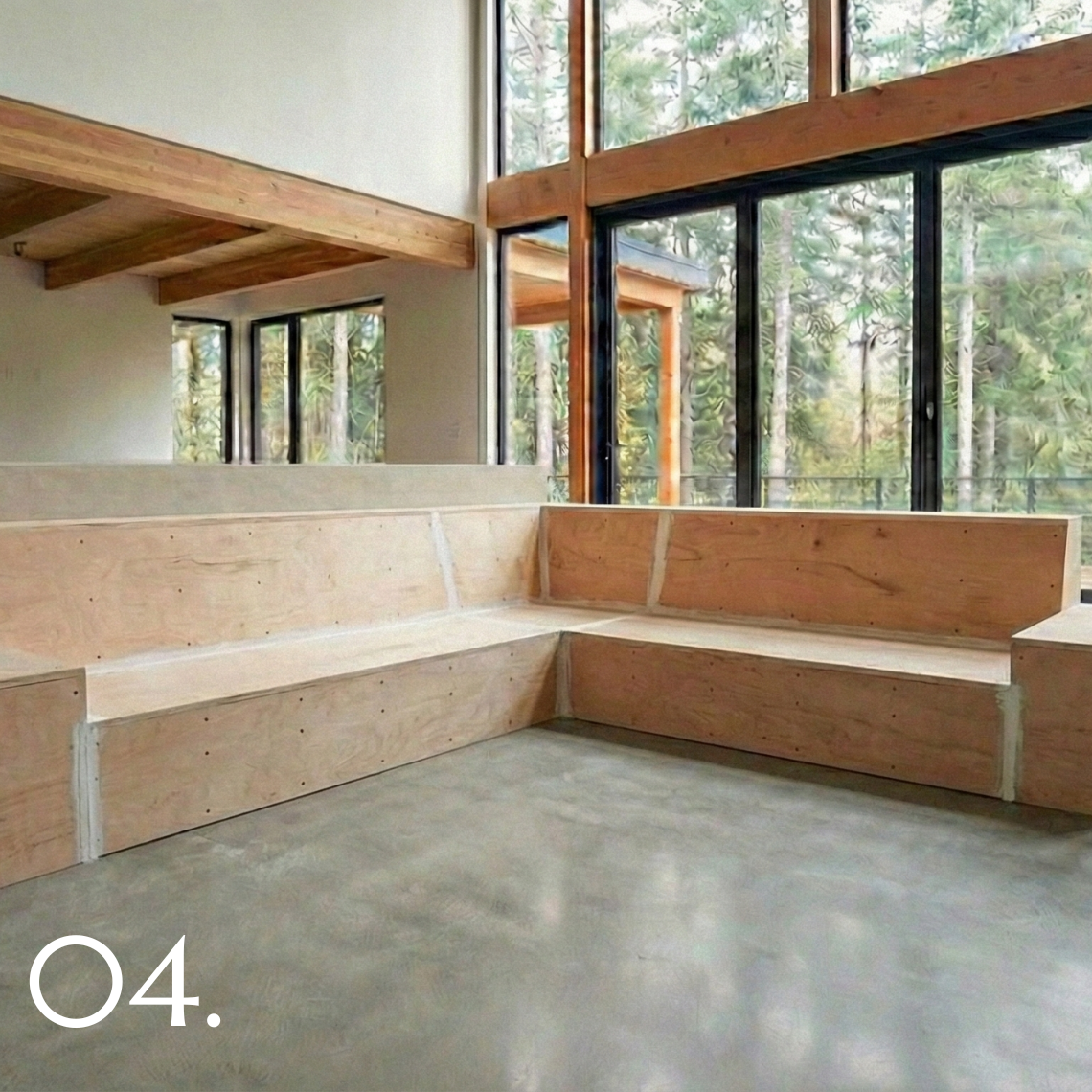
Substrate Engineering
Built-ins are designed as rigid, stable assemblies engineered specifically to receive microcement. Substrate thickness, internal framing, and support conditions are resolved to minimize movement and ensure long-term performance.
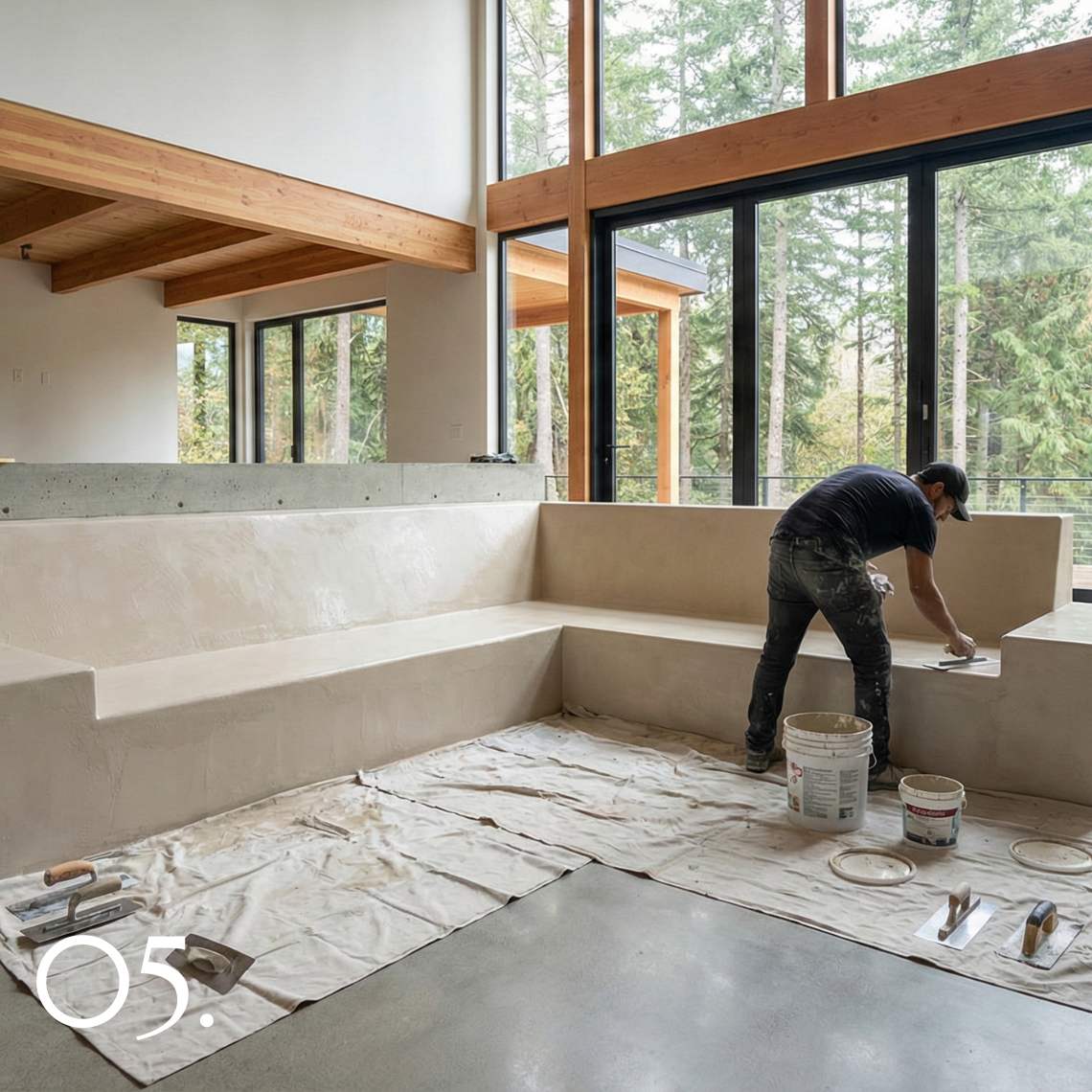

Microcement Application
Microcement is applied by hand in multiple thin layers, allowing surfaces to wrap seamlessly across planes, edges, and junctions. Controlled curing and refinement establish the final surface character.
Refinement, Sealing and Integration
Surfaces are refined and sealed using systems appropriate to their location and use. Final integration with adjacent finishes ensures built-ins read as continuous architectural elements rather than applied furniture.
Microcement Built-ins FAQ
-
No. Skim Co built-ins are custom, architectural elements designed and engineered to support continuous microcement finishes. They are formed as part of the architecture, not installed as off-the-shelf cabinetry.
-
Built-ins are digitally modeled to resolve dimensions, edge conditions, and surface transitions. CNC fabrication is used where precision is required, followed by hand assembly and reinforcement.
-
Yes, when designed appropriately. Built-ins in bathrooms are engineered with moisture exposure in mind, and waterproofing and sealing are integrated into the system where required.
-
Yes. All built-ins are custom-designed to suit the space, use, and desired proportions. Dimensions, profiles, and integration with surrounding finishes are resolved during design.
-
No. Built-ins are not appropriate for unstable substrates, temporary installations, or situations where movement cannot be controlled. Suitability is assessed during consultation and design review.