
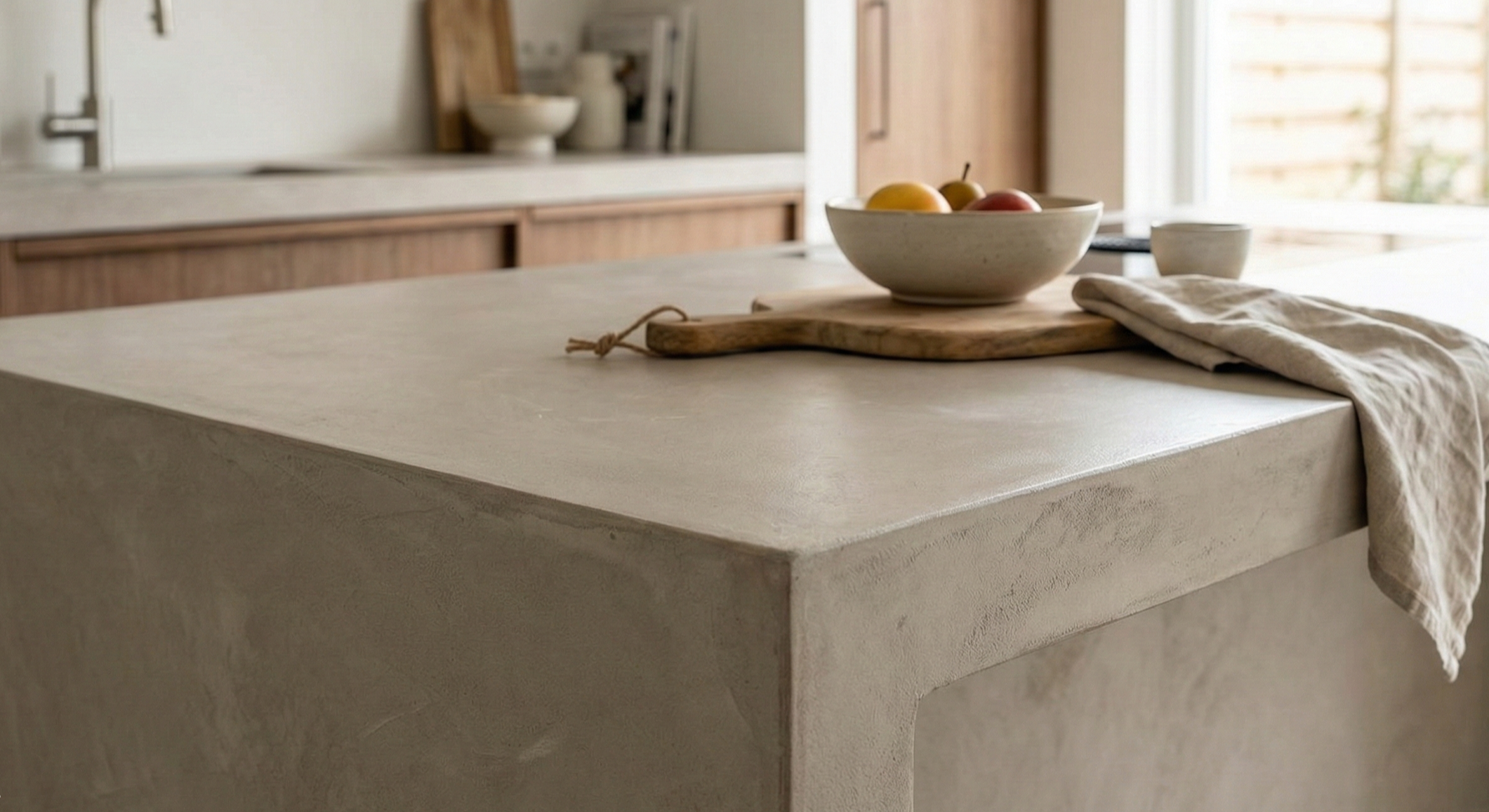
Microcement Countertops
A seamless, hand-applied alternative to stone countertops, designed for contemporary kitchens and baths.
Microcement countertops are treated as a complete surface system — from substrate engineering through to hand application and sealing — to perform in residential and light commercial environments.
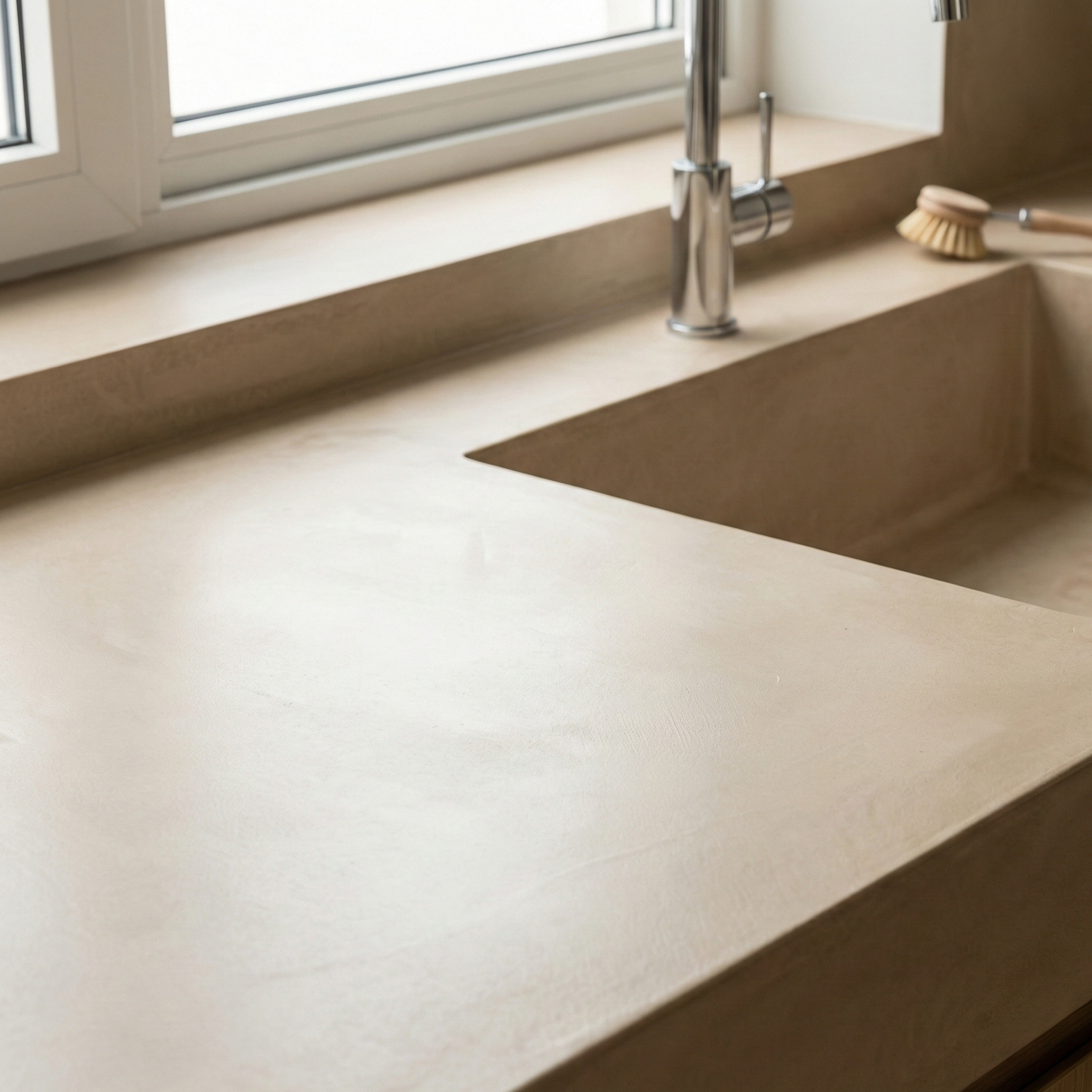
Seamless Countertops
Microcement countertops are continuous, hand-applied surface systems that create seamless horizontal surfaces without joints, grout lines, or applied edges. Applied in thin layers over engineered, rigid substrates, they read as calm, monolithic volumes rather than assembled components.
At Skim Co, microcement countertops are treated as a complete surface system — not a coating. Each project includes substrate design and assessment, structural build-up, edge detailing, and a sealing strategy matched to the intended use.
Microcement countertops are suitable for:
• Kitchen countertops and islands
• Bathroom vanities
• Integrated sink details
• Light commercial applications, including cafés, restaurants, and hospitality spaces
All surfaces are applied by hand and finished with durability in mind. Waterproofing, edge protection, and sealing are integral to the system, particularly in high-use areas.
Microcement countertops are best suited to clients seeking a seamless alternative to stone, with subtle variation and long-term performance for residential and light commercial environments.
Microcement Countertop Process
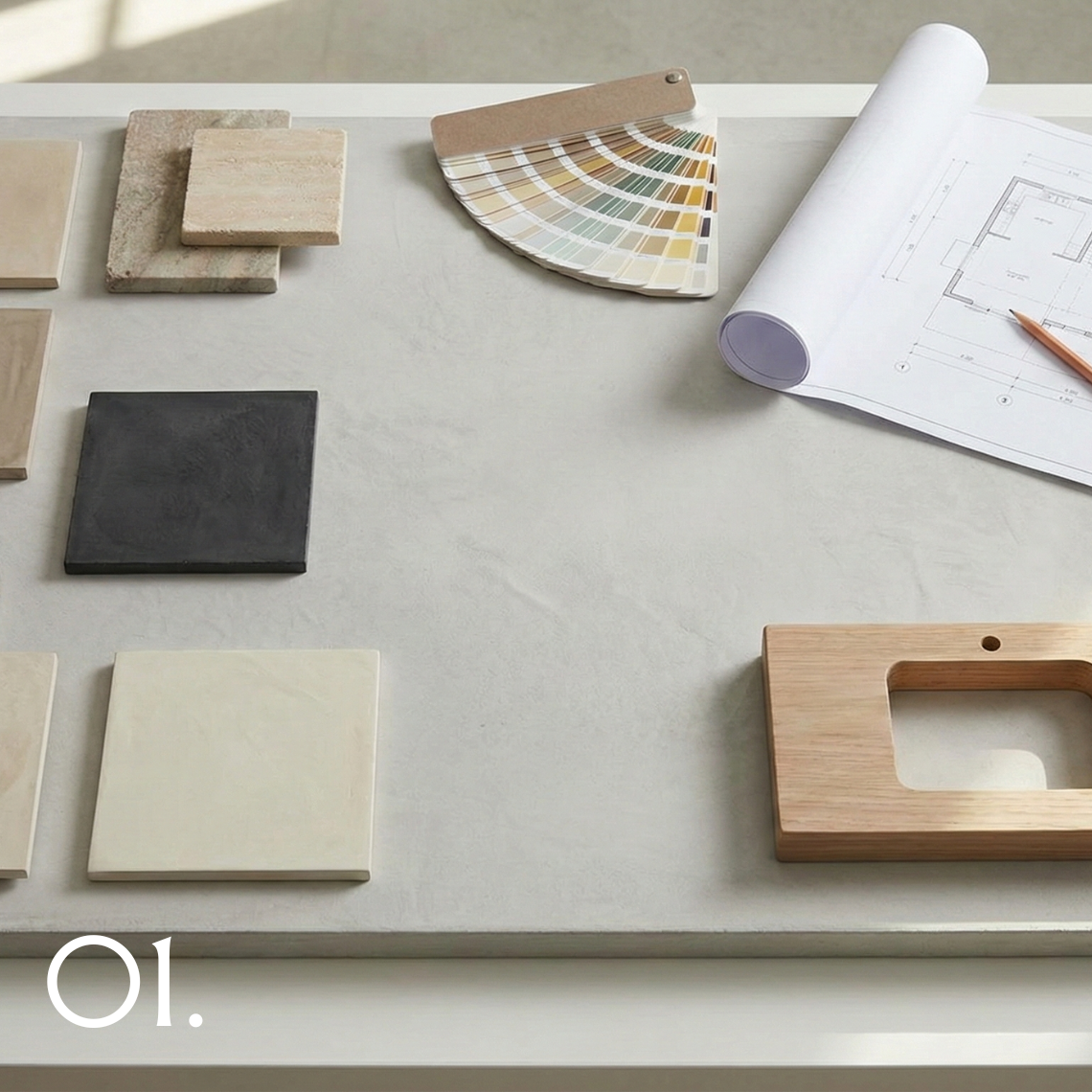
Design, Use & Material
Each countertop begins with clarity around use, edge thickness, sink integration, and surface character. Colour, variation, and finish expectations are set early to avoid surprises later.
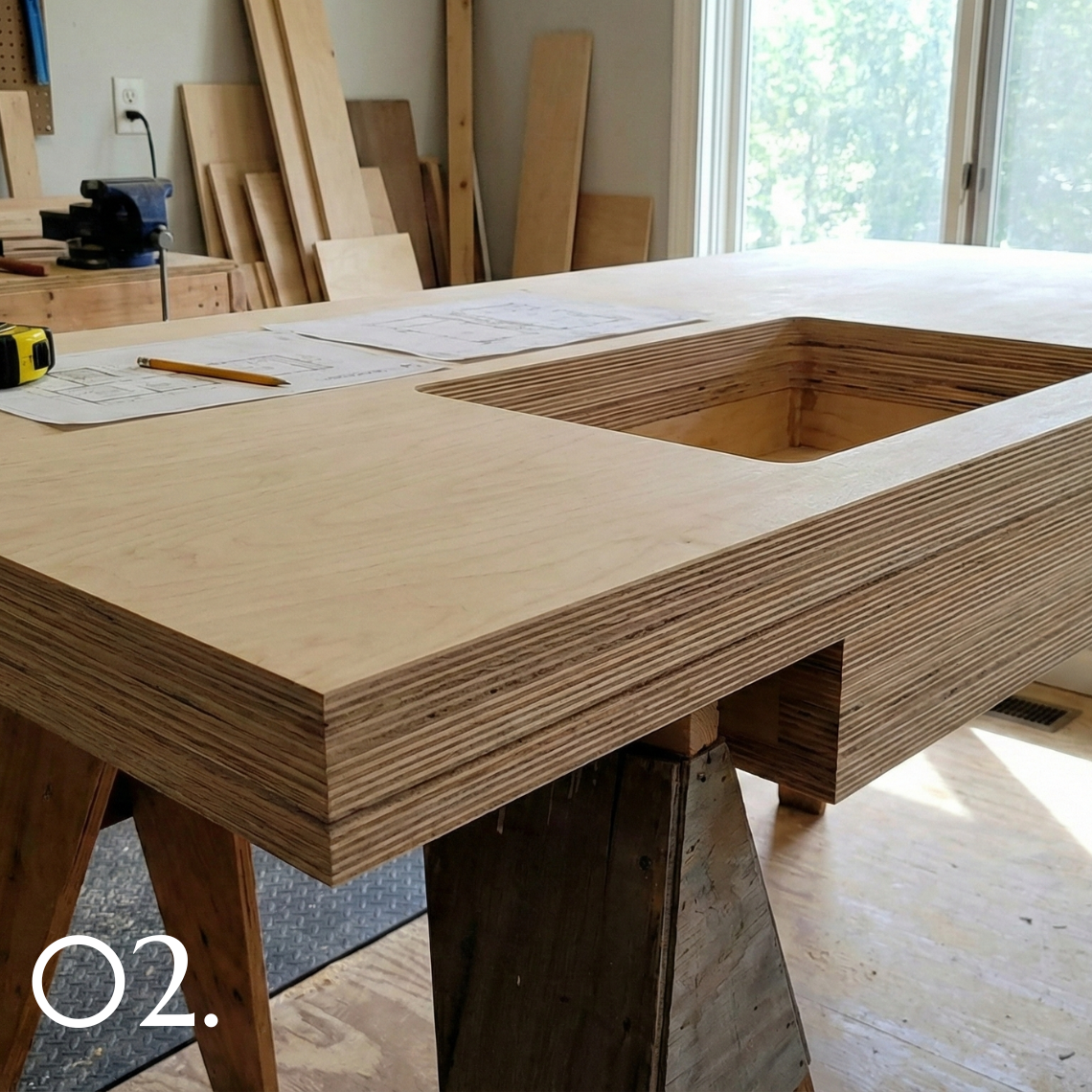
Substrate Engineering
Countertops are designed as rigid assemblies, not surfaces applied to cabinetry. Substrate thickness, edge build-up, cutouts, and support conditions are resolved before fabrication, with digital modeling and CNC fabrication used where precision is required.
Substrate Installation
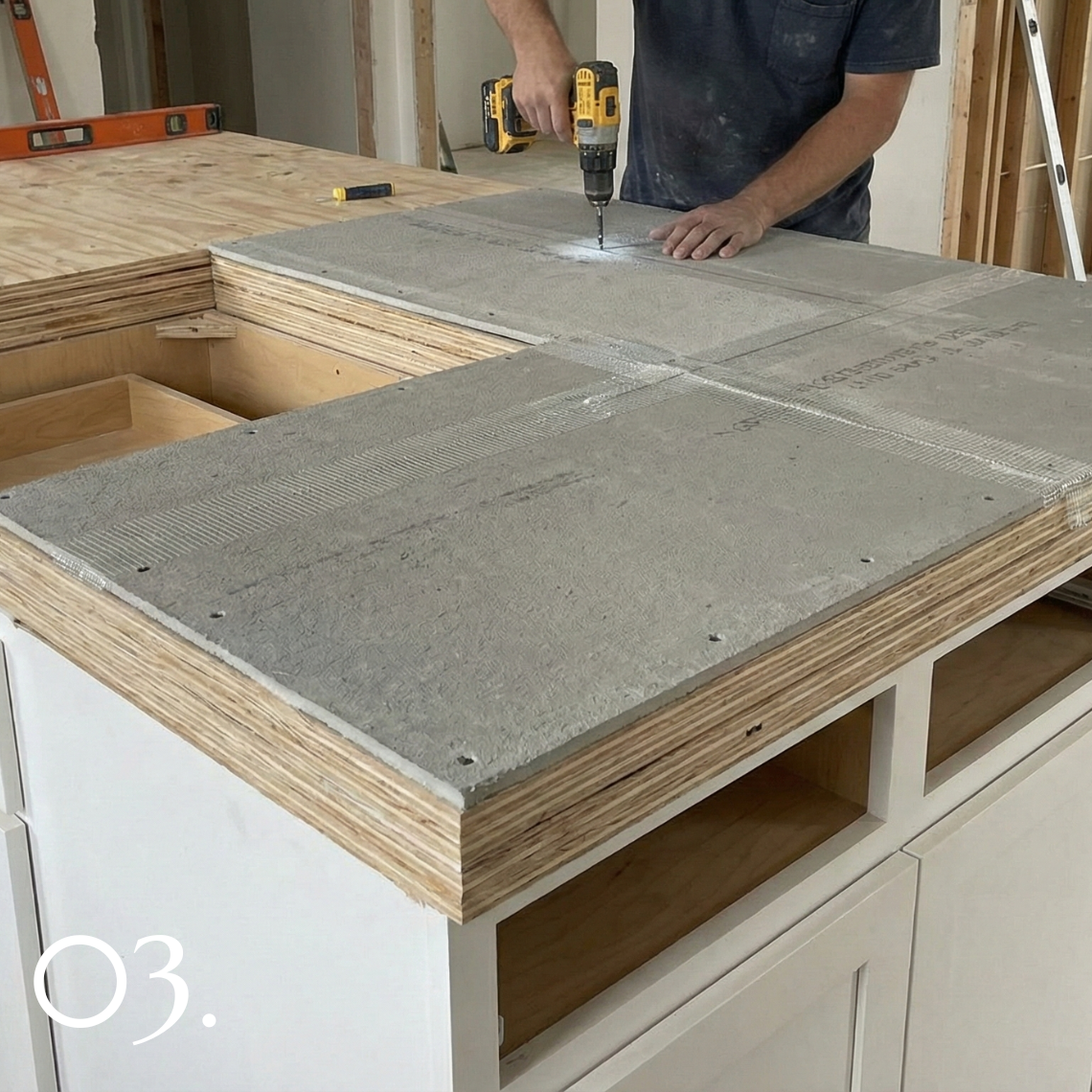
Engineered plywood substrates are fabricated, reinforced, and installed to create a stable, non-moving base. Cementitious sheathing is added to isolate wood movement and prepare for mineral finishes.
Surface Preparation
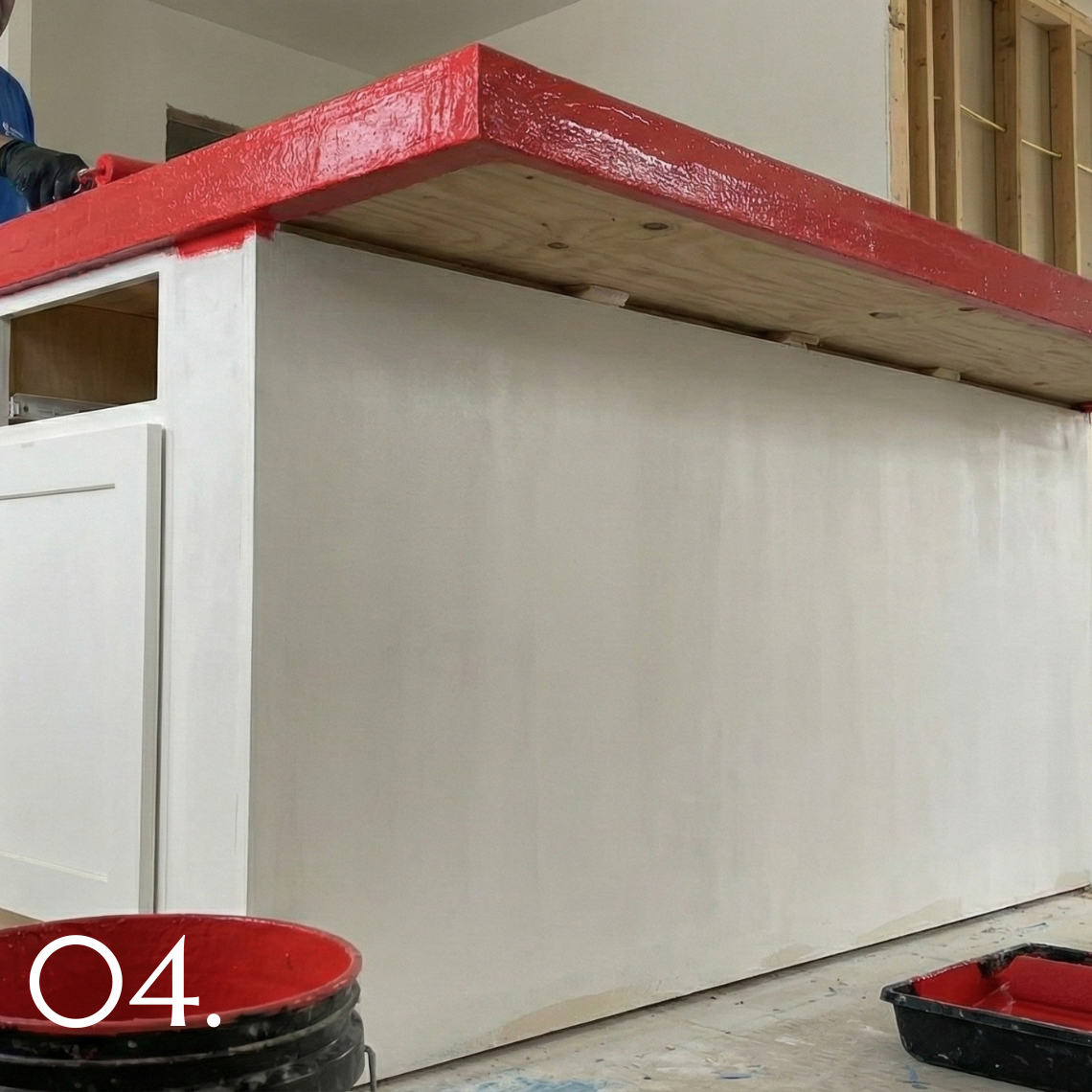
Waterproofing membranes are applied continuously across horizontal surfaces, edges, and sink cutouts. Transitions and penetrations are detailed before any finish layers are introduced.
Microcement Layers
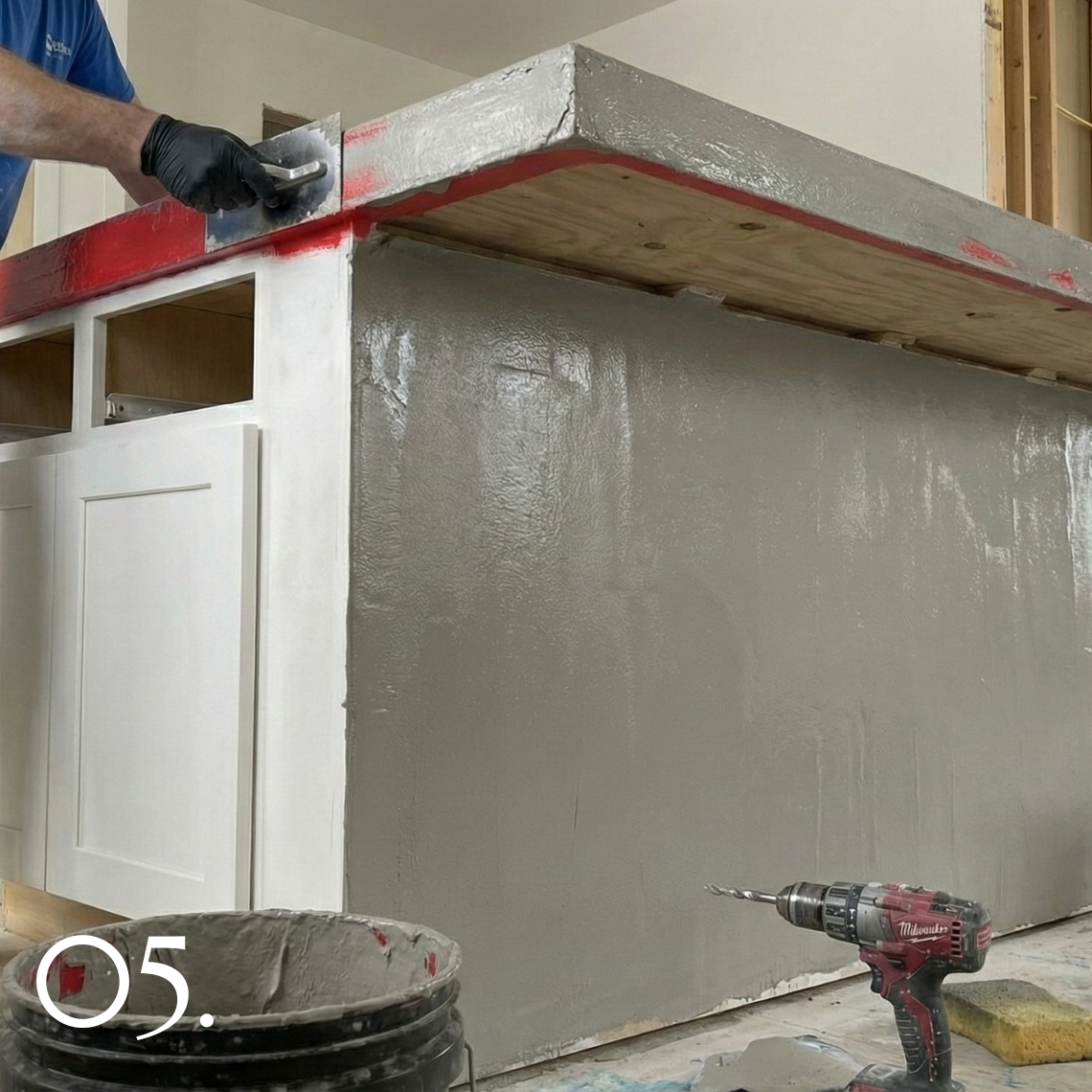
Microcement is applied by hand in multiple thin layers, with controlled curing and refinement between coats. This stage establishes the final surface character and continuity.
Sealing & Final Protection
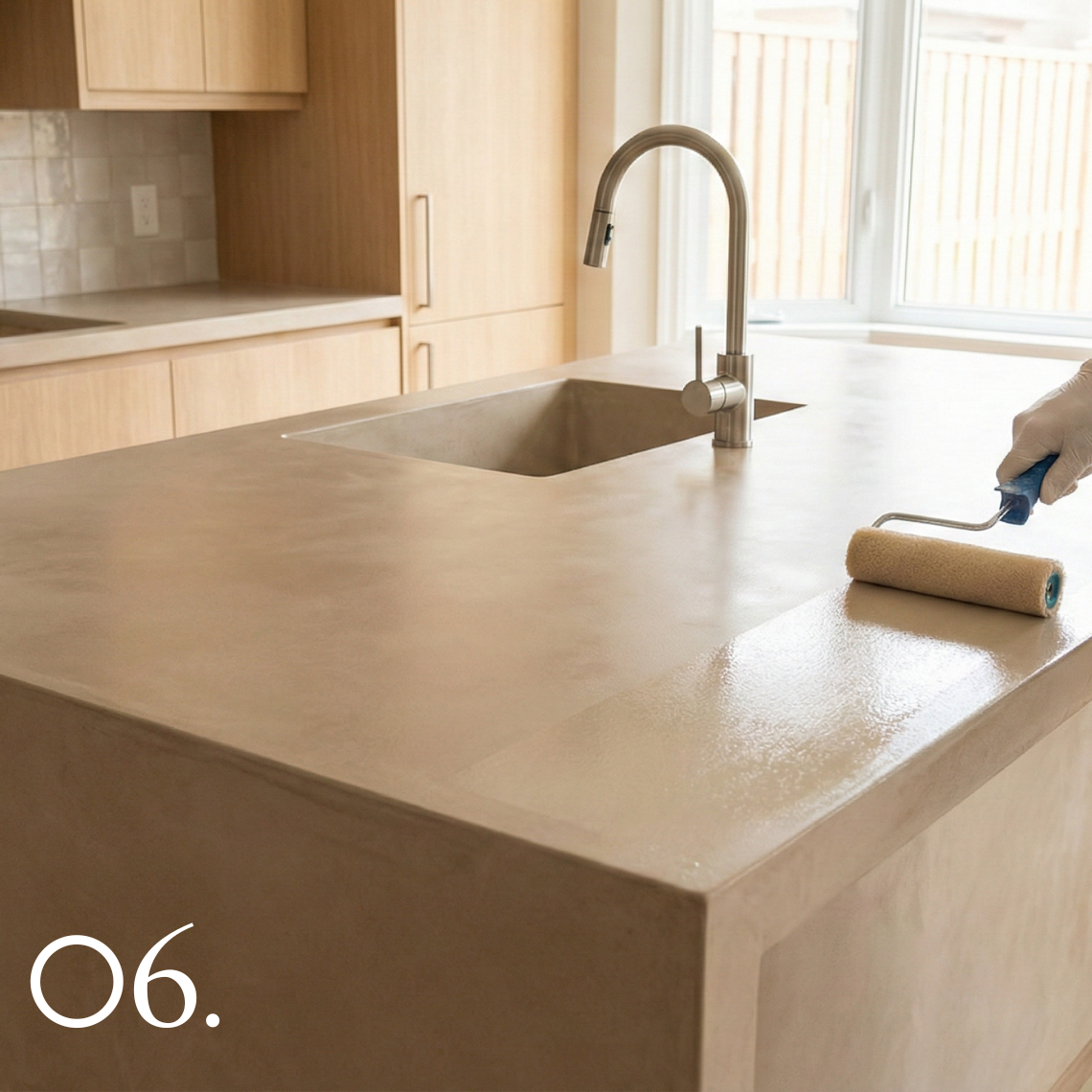
Surfaces are refined, sealed, and protected using systems appropriate to the intended use. Special attention is given to sinks, edges, and high-wear areas to support long-term performance.
Microcement Countertop FAQ
-
No. Microcement countertops are applied by hand and exhibit natural tonal variation and subtle movement. This variation is inherent to the material and is considered part of its character.
-
Yes. Microcement countertops can be designed with integrated sinks that are formed directly into the surface. This creates a seamless, continuous finish with no visible joints between the countertop and basin. Integrated sinks are typically built over a shaped substrate and then coated in the same microcement system, producing a clean architectural look that is both durable and easy to maintain.
-
Yes, when designed and installed as part of a complete system that includes engineered substrates, waterproofing, and sealing. Suitability is confirmed during assessment based on use and detailing.
-
Microcement is a thin-build surface system that relies on rigid, stable substrates. While substrates are engineered and reinforced where required, movement in the underlying structure can lead to cracking. Substrate design and suitability are critical.
-
When properly built and sealed, microcement countertops are suitable for everyday residential use and light commercial environments such as cafés and restaurants. Like all continuous surfaces, they may show wear over time depending on use, maintenance, and sealing schedule.
-
Sealed microcement countertops are designed to resist everyday staining, but they are not completely stain-proof. Prompt cleaning and appropriate care help maintain appearance over time.
-
No. Microcement countertops are not appropriate for unstable cabinetry, heavy industrial use, or environments subject to excessive impact or abuse. Suitability is determined during consultation and design review.